
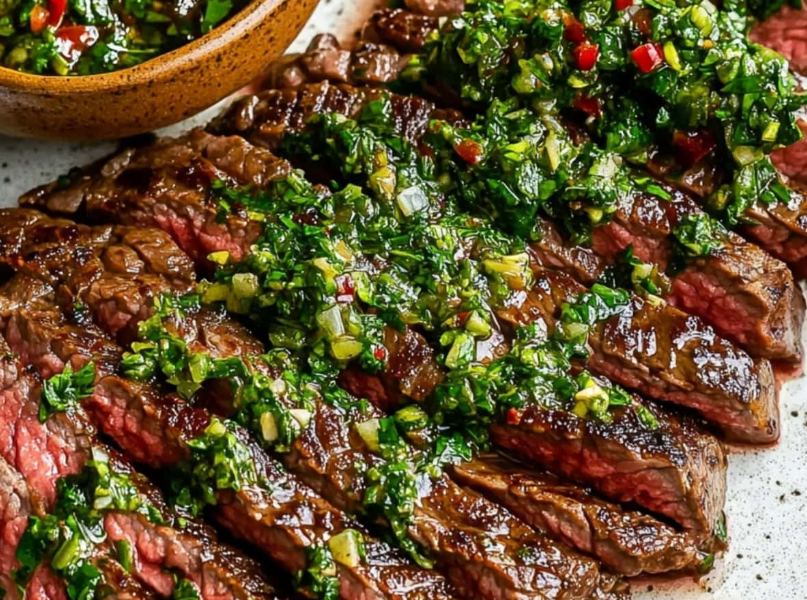
The Ultimate Chimichurri Steak Recipe: Restaurant-Quality at Home
Let’s be completely honest with each other for a second: going out to a high-end steakhouse is a magnificent experience, but it can absolutely wreck your weekend budget. You get dressed up, you wait for a table, you pay an arm and a leg for a piece of meat, and then you’re hit with a massive bill for a couple of side dishes that were sold separately anyway.
What if I told you that you could recreate that exact same high-energy, explosion-of-flavor culinary experience right in your own kitchen? And what if I told you that you could do it in under 30 minutes with a budget-friendly cut of meat?
Welcome to the magic of the Chimichurri Steak Recipe.
This dish is a literal masterpiece of culinary balance. You take a deeply savory, beautifully charred, juicy piece of beef and smother it in a bright, tangy, herby, garlic-packed homemade chimichurri sauce that cuts through the richness of the meat like a laser beam. It is fresh, it is vibrant, it is deeply satisfying, and it is going to completely change your weeknight dinner rotation.
If you’ve been looking for an easy grilled steak or skillet-seared masterpiece that will make your family think you secretly went to culinary school over the weekend, you have arrived at the right place. Grab your tongs, open up your spice cabinet, and let’s dive deep into making the best steak with chimichurri you’ve ever tasted.
What on Earth is Chimichurri? (And No, It’s Not Pesto!)
Before we fire up the stove or the grill, we need to talk about the star of the show: the chimichurri.
If you’ve never had it before, chimichurri is an authentic chimichurri recipe originating from Argentina and Uruguay, where they absolutely know a thing or two about grilling meat. It is a loose, oil-and-vinegar-based condiment that is packed to the brim with finely chopped fresh parsley, pungent garlic, dried oregano, red wine vinegar, and good quality olive oil.
A common misconception is that it’s just “South American pesto.” Let me stop you right there! While pesto is thick, creamy, nutty, and heavily reliant on basil and parmesan cheese, chimichurri is sharp, tangy, acid-forward, and beautifully coarse.
The main job of a great chimichurri is to act as a counterweight to the heavy, fatty, rich nature of beef. When you take a bite of perfectly seared steak coated in this vibrant green sauce, the acidity from the red wine vinegar wakes up your palate, while the garlic and herbs enhance the savory notes of the meat. It’s a match made in culinary heaven.
Choosing Your Weapon: The Best Cuts of Beef for Chimichurri
One of the reasons this Chimichurri Steak Recipe is an absolute lifesaver for home cooks is that it works brilliantly with less expensive, thinner cuts of beef. You don’t need a dry-aged Tomahawk or an expensive Filet Mignon to make this dish shine. In fact, those cuts have so much of their own fat and buttery texture that they can sometimes fight with the sharpness of the sauce.
Instead, we want to look for lean, intensely beefy cuts that love a quick, high-heat sear. Here are the top contenders you should look for at your local butcher counter:
1. Flank Steak (The People’s Champion)
Flank steak is our absolute favorite choice for this recipe. It’s a wide, relatively flat, lean cut of meat with a very distinct, prominent grain running straight across it. Because it’s lean, it cooks incredibly fast, making it ideal for a quick restaurant-quality dinner. When marinated properly and sliced thin against the grain, it becomes melt-in-your-mouth tender and carries an incredibly deep, beefy flavor.
2. Skirt Steak (The Ultimate Flavor Bomb)
Skirt steak is long, thin, and has an even more pronounced grain than flank steak. It contains a bit more fat running through it, which means it develops an absolutely spectacular, crispy crust when exposed to high heat. It absorbs marinades like a sponge and is a fantastic alternative if you want an even juicier bite.
3. Flat Iron or Hanger Steak
If you want something that feels a little closer to a traditional thick steak but still retains that deep flavor profile, a flat iron or hanger steak is an exceptional alternative. They are beautifully marbled, relatively affordable, and hold up wonderfully against a heavy pour of green sauce.
The Grocery List: Everything You Need
Simplicity is the soul of great home cooking. You don’t need a massive list of obscure ingredients to pull off this culinary home run. Here is a breakdown of what you need to grab from the grocery store:
For the Steak & Its Quick Marinade:
- 1.5 to 2 lbs Flank Steak: Look for a piece that is relatively uniform in thickness so that it cooks evenly from edge to edge.
- 2 tbsp Olive Oil: Helps the seasonings stick and creates a beautiful sear in the pan.
- 3 cloves Garlic (Crushed): To infuse the meat with background aromatics.
- 1 tbsp Red Wine Vinegar: A tiny splash to help tenderize the surface muscle fibers before cooking.
- 1 tsp Cumin: Adds a subtle, smoky undertone that complements the char of the meat.
- Salt and Black Pepper: Be incredibly generous here. A good steak needs a heavy hand of salt to build that savory crust!
For the Homemade Chimichurri Sauce:
- 1 cup Fresh Flat-Leaf Italian Parsley: Finely chopped. Make sure you use flat-leaf, not curly parsley! Curly parsley tastes like grass and has a rubbery texture; flat-leaf parsley is elegant, peppery, and soft.
- 4 to 5 cloves Fresh Garlic: Minced as finely as humanly possible.
- 2 tbsp Fresh Oregano (or 1 tsp Dried Oregano): Dried oregano is actually very traditional in Argentina and provides a beautiful, earthy depth.
- 1/3 cup Good Quality Extra Virgin Olive Oil: Since this sauce isn’t cooked, the quality of your oil matters. Use something smooth and fruity.
- 2 tbsp Red Wine Vinegar: This provides the essential acidic tang. Do not swap this for white vinegar or apple cider vinegar if you can help it—red wine vinegar has the perfect profile for beef.
- 1/2 tsp Red Pepper Flakes: For a gentle, warming kick of heat.
- 1/2 tsp Coarse Kosher Salt & Black Pepper: To tie all the flavors together.
Step 1: Master the Chimichurri Sauce (The 5-Minute Rule)
The absolute golden rule of making this dish is to make the sauce first.
While you can throw everything into a food processor and pulse it a few times, I am going to beg you to put the machine away and use a sharp chef’s knife instead. Why? Because a food processor tends to pulverize the parsley and emulsify the oil, turning your beautiful sauce into an opaque, muddy green paste. We want a clear, glassy, textured sauce where you can see the individual bits of green leaf, white garlic, and red pepper flakes floating beautifully in golden oil.
The Knife Work Method:
- Wash your flat-leaf parsley thoroughly and pat it completely dry with paper towels. Excess water will dilute the oil and ruin the sauce.
- Gather the parsley leaves into a tight bunch on your cutting board and use a very sharp knife to finely chop them. Avoid bruising the herbs by sliding your knife cleanly through the leaves rather than crushing down vertically.
- In a medium glass bowl, combine your finely chopped parsley, minced garlic, and oregano.
- Pour in the red wine vinegar, extra virgin olive oil, red pepper flakes, salt, and pepper.
- Stir everything together with a spoon.
Natasya’s Pro Tip: Once the sauce is mixed, cover the bowl and let it sit on your kitchen counter at room temperature while you prepare and cook the steak. This downtime allows the vinegar to draw out the oils from the garlic and herbs, creating a beautifully integrated, deeply aromatic sauce. Never put it in the fridge before serving—cold oil thickens up and masks the vibrant flavors!
Step 2: Preparing and Marinading the Steak
Now that your sauce is hanging out and building flavor on the counter, it’s time to focus on our protein.
Take your flank steak out of the refrigerator about 20 to 30 minutes before you plan to cook it. This is a critical step in learning how to cook juicy steak. If you drop a freezing-cold piece of meat directly onto a blazing-hot skillet or grill, the muscle fibers will instantly seize up and go tense, forcing out all the precious internal juices. Bringing the meat up closer to room temperature ensures an even cook and a much more tender result.
The Seasoning Prep:
- Pat the surface of the steak completely dry with paper towels. Just like with our Crispy Buffalo Chicken Wings or Honey Garlic Pork, moisture is the absolute enemy of a beautiful, golden-brown sear.
- In a small dish, mix the olive oil, crushed garlic, red wine vinegar, cumin, salt, and pepper together to create a loose paste.
- Rub this mixture over all sides of the flank steak, massaging it gently into the grain of the meat. Let it marinate on the counter for 15 to 20 minutes.
Step 3: High-Heat Mastery (Stovetop or Grill)
To get that classic steakhouse character, we need extreme, intense heat. We want to cook the inside of the flank steak quickly to a perfect medium-rare while simultaneously creating a deeply caramelized, dark crust on the outside.
Method A: The Cast Iron Skillet (My Personal Favorite)
If you are cooking indoors, a heavy cast-iron skillet is your absolute best friend. It holds onto heat beautifully and creates an incredible crust.
- Crank your stovetop heat up to high and place your dry cast-iron skillet on the burner. Let it heat up until you see a tiny wisp of smoke rising from the pan.
- Carefully lay the marinated flank steak into the dry pan. You should instantly hear a massive, loud sizzle! If it doesn’t sizzle loudly, your pan isn’t hot enough yet.
- Sear the steak without moving it for 4 to 5 minutes to develop that epic crust.
- Flip the steak over using a pair of sturdy tongs and sear the other side for an additional 4 minutes for a perfect medium-rare doneness.
Method B: The Outdoor Grill (The Summer Classic)
If you prefer an easy grilled steak with that signature smoky backyard flavor, fire up your grill!
- Clean your grill grates thoroughly and preheat your gas or charcoal grill to high heat (around 450°F / 230°C).
- Oil the grates lightly using a paper towel dipped in vegetable oil held with tongs.
- Place the flank steak down at an angle across the grates to get those beautiful, professional-looking grill marks.
- Grill for 5 minutes, flip it over, and grill for another 4 to 5 minutes on the opposite side.
Step 4: The Critical Rest & The Science of Slicing
Once your steak is done cooking, remove it from the heat source and place it onto a clean cutting board or a warm serving platter.
Just like when making our Honey Garlic Pork Tenderloin, you must let the meat rest for 8 to 10 minutes before a knife even touches it. If you cut into it right away, the hot juices will stream out like water from a broken pipe, leaving you with a dry, gray piece of leather. Resting allows the liquid to slowly settle back down and move into the center of the muscle fibers, keeping every single slice beautifully pink and juicy.
How to Slice Flank Steak Against the Grain
Once rested, it’s time to slice. Because flank steak has long, tough, stringy muscle fibers running parallel down the length of the meat, how you slice it will determine whether it feels tender or incredibly chewy.
Look closely at the steak to find the direction the lines (the grain) are running. You want to place your knife perpendicular (at a 90-degree angle) to those lines. Slice the steak into thin, elegant strips, angling your knife blade slightly at a 45-degree tilt to create wide, gorgeous ribbons of beef. By cutting across the grain, you are manually breaking those long, tough muscle fibers into tiny, short pieces, doing the hard work for your teeth ahead of time!
Temperature Guide for the Perfect Steak
Don’t guess when your steak is done—use a reliable digital meat thermometer to get perfect results every single time! Insert the probe into the thickest part of the meat before pulling it off the heat.
What to Serve with Your Chimichurri Steak
This Chimichurri Steak Recipe features incredibly bold, punchy, acid-forward flavor profiles, so your side dishes should either match that energy or act as a mild, comforting base to absorb the juices. Here are my favorite pairings:
1. Potato Perfection
- Crispy French Fries or Wedges: The ultimate classic pairing. Dipping a salty, hot french fry into a pool of extra garlic chimichurri sauce is an experience that borders on spiritual.
- Roasted Sweet Potato Cubes: The natural sweetness of sweet potatoes provides an incredible, pleasant contrast to the sharp, savory tang of the herb sauce.
2. Fresh & Light
- Grilled Corn on the Cob: Brush your corn with a little bit of butter and char it right alongside your steak on the grill.
- A Simple Tomato & Onion Salad: Thick slices of ripe heirloom tomatoes and thinly sliced red onions dressed with olive oil and a splash of lime juice complement the Argentinian vibe perfectly.
Storing and Upcycling Your Leftovers
If you happen to have any leftover steak or sauce, do not let them go to waste! They make for incredible reinvented meals the next day.
- The Steak: Store any leftover sliced steak in an airtight container in the fridge for up to 3 days. To reheat without overcooking it, flash-fry the slices in a hot skillet with a teaspoon of butter for just 60 seconds, or eat it cold straight from the fridge inside a gourmet steak sandwich!
- The Chimichurri: Your homemade chimichurri sauce will stay fresh in a jar in the refrigerator for up to a week. The olive oil will solidify slightly when chilled, so simply set the jar out on your counter for 15 minutes before using it to let it return to a beautiful, liquid state.
Creative Ways to Use Leftover Chimichurri:
Don’t limit this spectacular green sauce just to beef! It is an incredibly versatile flavor booster that can elevate tons of other basic dishes:
- Drizzle it over fried eggs in the morning for a breakfast powerhouse.
- Use it as a marinade or finishing glaze for a fresh Chicken Recipe.
- Toss it with warm roasted potatoes instead of using traditional butter or sour cream.
- Marinate raw shrimp in it before tossing them onto a hot skillet for an instant garlic-herb seafood dinner.
Frequently Asked Questions (FAQ)
Can I use a food processor if I’m short on time?
Yes, you can, but proceed with extreme caution! Use the “pulse” setting rather than turning it on continuously. Hit the button just 3 or 4 times until the ingredients are broken down but still distinct. If you over-process it, it will turn into a bitter, completely smooth paste that changes the texture and presentation of the dish.
Can I use apple cider vinegar instead of red wine vinegar?
If you are in an absolute pinch, yes, apple cider vinegar will provide the necessary acidity. However, red wine vinegar has a deep, slightly sweet, robust grape undertone that pairs uniquely well with beef. Avoid using regular white distilled vinegar, as its bite is far too harsh and chemical-like for a fresh sauce.
Is this recipe keto and paleo-friendly?
Absolutely! This entire recipe is naturally low-carb, keto-compliant, paleo-friendly, and whole30-approved. It’s an incredible way to pack in tons of healthy fats from the olive oil and lean clean protein from the beef without adding any processed sugars or heavy starches.
Final Thoughts: Bring the Steakhouse Experience Home
Cooking a flawless steak at home doesn’t have to be a scary, intimidating process reserved only for special anniversaries or holidays. By using a budget-friendly cut like flank steak and elevating it with a bright, lightning-fast homemade chimichurri sauce, you can turn any boring Tuesday night into a luxury dining experience right at your own kitchen table.
It’s fast, it’s vibrant, it’s deeply satisfying, and it proves that you don’t need an expensive restaurant bill to enjoy food that makes you want to dance around your kitchen.
So, skip the steakhouse reservations tonight. Head out to your local grocery store, grab a beautiful bunch of fresh flat-leaf parsley and a good piece of beef, and let’s make a meal you won’t forget anytime soon.
Happy cooking, everyone! 🥩🌿✨