
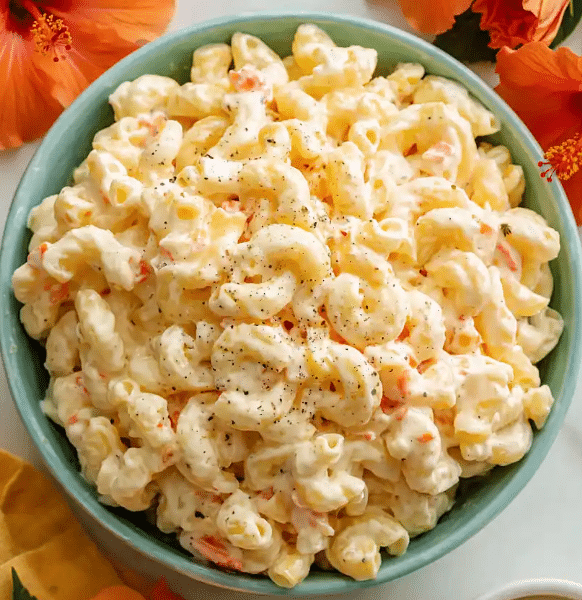
The Ultimate Guide to the Best Creamy Hawaiian Macaroni Salad
If you have ever stepped foot in Hawaii or walked into a traditional Hawaiian barbecue joint on the mainland, you already know there is one absolute, non-negotiable rule of the island plate lunch: you are getting two scoops of white rice, a mountain of savory protein, and exactly one perfect, ice-cream-scooped mound of ultra-creamy, sweet, and tangy Hawaiian Macaroni Salad.
Let’s be completely real for a second. In most parts of the world, pasta salad is a total afterthought. It’s that sad, lukewarm bowl sitting at the end of a backyard buffet line, filled with crunchy vegetables, oily dressing, and rubbery noodles. But in Hawaii? Mac salad is a culinary art form. It is the glorious, velvety element that brings the entire plate together, cutting through the smoky richness of Kalua pork or the sweet, charred edges of Huli Huli chicken.
If you are looking to replicate that exact, addictive comfort food experience in your own kitchen, you have come to the right place. Forget your preconceived notions about mainland pasta salads. We are diving deep into the secret techniques, the specific ingredients, and the exact step-by-step process required to make the absolute best macaroni salad you have ever tasted.
The Philosophy of an Authentic Hawaiian Mac Salad
To make a truly authentic Hawaiian mac salad, you have to understand its history and philosophy. This isn’t a dish where you throw in everything left in your crisper drawer. There are no bell peppers here. There are no cubes of cheddar cheese, no hard-boiled eggs (though some families do add them, it’s a hot debate!), no bacon, and absolutely no mustard.
The true beauty of an island style macaroni salad lies in its absolute minimalism. It relies on a very short list of humble ingredients, but the way those ingredients are treated is pure kitchen science. The goal is a texture that is incredibly smooth, rich, and velvety, with a flavor profile that hits the perfect equilibrium of rich creaminess, sharp tang, and a subtle touch of sweetness.
If you add too many textures or contrasting crunch factors, you completely miss the point. The salad needs to be soft enough to eat with a fork or spoon alongside your rice, acting almost like a rich sauce for the rest of your meal.
The Secret Techniques: Why Mainlanders Get It Wrong
Most people who attempt a creamy mac salad recipe at home end up disappointed because they follow standard Italian cooking rules. If you want that genuine plate lunch flavor, you have to throw the traditional culinary rulebook out the window. Here are the three golden secrets that separate the amateurs from the pros:
1. The “Al Dente” Sin (Overcook Your Pasta!)
If you are making a traditional Italian pasta salad, you want the noodles to have a firm bite (al dente). If you do that with a Hawaiian Macaroni Salad, your dish is doomed from the start. Firm noodles will completely repel the mayonnaise dressing, leaving you with a greasy, separated mess.
For this recipe, you must deliberately, unapologetically overcook your elbow macaroni. You want the noodles to be plump, soft, and slightly split open. When the pasta expands past its normal limit, it becomes a literal sponge, ready to absorb all the liquids and flavors we are going to throw at it.
2. The Hot Vinegar Splash
This is the ultimate game-changer technique. The moment you drain your hot, overcooked macaroni, you do not rinse it with cold water. Instead, while the steam is still rising off the noodles, you toss them with a generous splash of apple cider vinegar.
Because the starch molecules in the hot pasta are wide open, they will drink up that vinegar instantly. This seasons the noodle from the inside out, providing that signature underlying tang that cuts through the heavy mayonnaise later on. If you wait until the pasta is cold to add your acid, it will just pool at the bottom of the bowl.
3. The Two-Stage Mayo Coat
Have you ever made a macaroni salad, put it in the fridge looking perfectly creamy, and pulled it out a few hours later only to find it completely dry and chalky? That happens because the pasta continues to absorb moisture as it sits.
To combat this, an easy macaroni salad recipe requires a two-stage dressing process. We apply the first layer of mayonnaise while the noodles are slightly warm to create a rich flavor base, and then we fold in the remaining mayonnaise right before serving to guarantee an ultra-glossy, velvety finish.
Ingredients Checklist: Simplicity is Key
Before heading to the grocery store, check your pantry. Because this ingredient list is so beautifully basic, the quality and type of ingredients you choose will make a massive impact on the final flavor.
The Breakdown:
- Elbow Macaroni: The classic, old-school choice. Do not use fancy shapes like cavatappi or rotini. Stick to the humble elbow.
- Mayonnaise: Let’s talk brand loyalty. In Hawaii, Best Foods mayonnaise (known as Hellmann’s east of the Rocky Mountains) is religion. Do not use Miracle Whip, do not use light mayo, and do not use avocado oil mayo if you want the authentic flavor. You need the full-fat, rich, real stuff.
- Apple Cider Vinegar: Provides a softer, fruitier acidity than harsh white vinegar.
- Whole Milk: Used to thin out the heavy mayonnaise coating, creating a smooth dressing that coats every single nook and cranny of the elbow pasta.
- Sugar: Just a touch of plain white granulated sugar to balance the vinegar and the salty mayonnaise. It shouldn’t taste like dessert, but it should have a noticeable sweet undertone.
- Carrot: Grated as finely as humanly possible. You want beautiful little flecks of orange throughout the salad, not hard, crunchy chunks.
- Onion: This is a crucial element. Do not dice the onion. You need to use a box grater to turn the onion into a fine pulp, almost a liquid juice. This allows the sharp, savory onion flavor to melt completely into the dressing without adding an unwanted crunchy texture.
- Salt and Black Pepper: Be incredibly generous with the black pepper. Authentic island mac salad always features prominent, visible specks of black pepper throughout the white dressing.
Step-by-Step Kitchen Walkthrough
Now that you understand the science and have gathered your ingredients, let’s pull up our sleeves and make some magic happen. Follow these steps exactly, and do not try to rush the chilling process!
Step 1: Cook the Pasta to Oblivion
Bring a large pot of heavily salted water to a rolling boil. Drop in one pound of elbow macaroni. Look at the package instructions for the cooking time, and completely ignore them. If the box says cook for 8 minutes, you are going to cook it for 12 to 14 minutes. Keep an eye on it—you want the noodles to be very plump, soft, and just on the verge of breaking apart.
Step 2: The Warm Acid Infusion
Drain the macaroni thoroughly in a colander, but do not rinse it. Transfer the hot pasta immediately into a large mixing bowl. While it is still steaming, pour 2 to 3 tablespoons of apple cider vinegar directly over the noodles. Give it a gentle toss with a rubber spatula. You will notice that within a minute, the noodles will absorb every single drop of that vinegar. Let the pasta cool down for about 10 to 15 minutes until it is warm to the touch, but no longer piping hot.
Step 3: Prepare the Aromatics
While your pasta is cooling, grab your box grater. Finely grate one medium carrot until you have about a half-cup of fine shreds. Next, grate a yellow or sweet white onion until you have about 2 tablespoons of grated onion pulp and juice.
Step 4: The First Mayo Application
In a separate bowl, whisk together 1.5 cups of your real mayonnaise, 1/3 cup of whole milk, 2 tablespoons of granulated sugar, your grated onion pulp, salt, and plenty of black pepper.
Pour this mixture over the warm macaroni, along with the shredded carrots. Stir gently until everything is completely coated. At this stage, it might look like there is way too much dressing, and it might look slightly soupy. Do not freak out! This is exactly what we want.
Step 5: The Deep Chill (The Crucial Wait)
Cover the bowl tightly with plastic wrap and place it into the deepest, coldest part of your refrigerator. It needs to chill for a minimum of 4 hours, but leaving it overnight is even better. As the salad sits in the cold, the starch in the overcooked noodles will lock hands with the mayonnaise and milk, pulling the flavors deep into the center of the pasta and thickening the dressing into an incredibly luxurious coating.
Step 6: The Final Polish
Before serving, pull the salad out of the fridge and give it a good stir. You will see that the noodles have drank up most of the moisture. To restore it to its ultimate glory, add the remaining 1/2 cup of mayonnaise and another splash of milk if needed. Toss gently, taste to adjust the salt and pepper, and use an ice cream scoop to serve perfect, beautiful mounds onto your plates.
What to Serve with Your Island Creation
This creamy mac salad recipe is fantastic on its own, but it truly shines when it is paired with classic Hawaiian proteins. To create the ultimate backyard island feast, try serving it alongside:
Kalua Pork
Slow-cooked, smoky shredded pork that mimics the traditional underground oven (imu) cooking style. The salty, smoky fat of the pork combines with the cold, sweet creaminess of the macaroni salad in a way that will make your taste buds sing.
Chicken Katsu
Crispy, panko-breaded fried chicken cutlets drizzled with a tangy, savory barbecue-style katsu sauce. The smooth texture of the Hawaiian Macaroni Salad acts as the perfect contrast to that ultra-crisp panko crunch.
Loco Moco
A true island classic consisting of a bed of white rice, topped with a juicy beef burger patty, a fried egg with a runny yolk, and smothered in rich brown gravy. Placing a scoop of cold mac salad right next to that hot gravy creates an incredible flavor experience.
Recipe Variations: The Great Island Debates
While the purist version presented above is what you will find at 90% of local lunch wagons, families across the islands love to customize their recipes. If you want to experiment, here are a few widely accepted variations:
- The Seafood Twist: Many locals love adding finely flaked canned tuna or chopped imitation crab meat (kamaboko) into the mix. This adds a wonderful savory depth that pairs perfectly with the sweet mayonnaise base.
- The Potato Mashup: Can’t decide between potato salad and macaroni salad? In Hawaii, it’s incredibly common to find “Mac-Potato Salad,” where a few boiled, mashed potatoes are folded directly into the macaroni batter for an even thicker, heartier texture.
- The Hard-Boiled Egg: Chopping up two hard-boiled eggs and mashing the yolks directly into the mayonnaise dressing adds an extra layer of rich, velvety fat that takes the creaminess to an absolute eleven.
Frequently Asked Questions (FAQ)
Can I make this dairy-free or vegan?
You can easily make this recipe dairy-free by swapping the whole milk for an unsweetened, neutral plant-based milk like almond or oat milk. To make it completely vegan, use a high-quality vegan mayonnaise alternative. Just make sure it has a rich, neutral flavor profile close to real egg-based mayonnaise!
How long will Hawaiian Macaroni Salad keep in the fridge?
Stored in an airtight glass container, your salad will stay fresh, delicious, and perfectly safe to eat for up to 3 to 4 days. In fact, many people argue that it tastes even better on day two because the flavors have had more time to meld together.
Why did my macaroni salad turn out watery?
If your salad ends up watery, it’s usually because the onions or carrots released too much excess moisture after being mixed in. To prevent this, ensure your pasta is cooled down to a warm temperature before adding the dressing, and don’t over-saturate the salad with onion juice if your onion happens to be extremely watery.
Do I have to use elbow macaroni?
While you can technically use other small pasta shapes like ditalini or small shells, elbow macaroni is the traditional hallmark of an authentic Hawaiian mac salad. The hollow shape of the elbow noodle helps trap the creamy dressing inside, giving you a burst of flavor with every single bite.
Summary Table: Mainland vs. Hawaiian Style
To keep your kitchen goals perfectly aligned, keep this quick comparison chart in mind:
| Feature | Mainland Pasta Salad | Hawaiian Macaroni Salad |
| Pasta Texture | Al Dente (Firm bite) | Overcooked (Soft, plump, absorbing) |
| Primary Dressing | Italian vinaigrette or light mayo | Heavy full-fat mayo mixed with milk |
| Acid Application | Tossed in cold at the very end | Splashed over hot steaming noodles |
| Vegetable Profile | Crunchy celery, peppers, olives, onions | Finely grated carrot flecks and onion pulp |
| Flavor Profile | Tangy, savory, herbaceous | Ultra-creamy, smooth, sweet, and tangy |
Final Thoughts: Bring the Aloha Spirit Home
Food has a beautiful way of transporting us to different corners of the world, and nothing captures the laid-back, comforting energy of the islands quite like a massive, glorious scoop of homemade Hawaiian Macaroni Salad.
It’s simple, it’s unpretentious, and it is absolute proof that when you treat basic ingredients with the right techniques, you can create something truly legendary. Whether you are hosting a summer backyard barbecue, prepping lunches for a busy week ahead, or just looking to recreate a favorite vacation memory, this recipe is guaranteed to satisfy.
So put on some island music, get that pasta water boiling, and remember—don’t be afraid to overcook those noodles! Your kitchen is about to become your new favorite plate lunch destination.
Enjoy every single creamy, delicious bite! 🌺🌴