
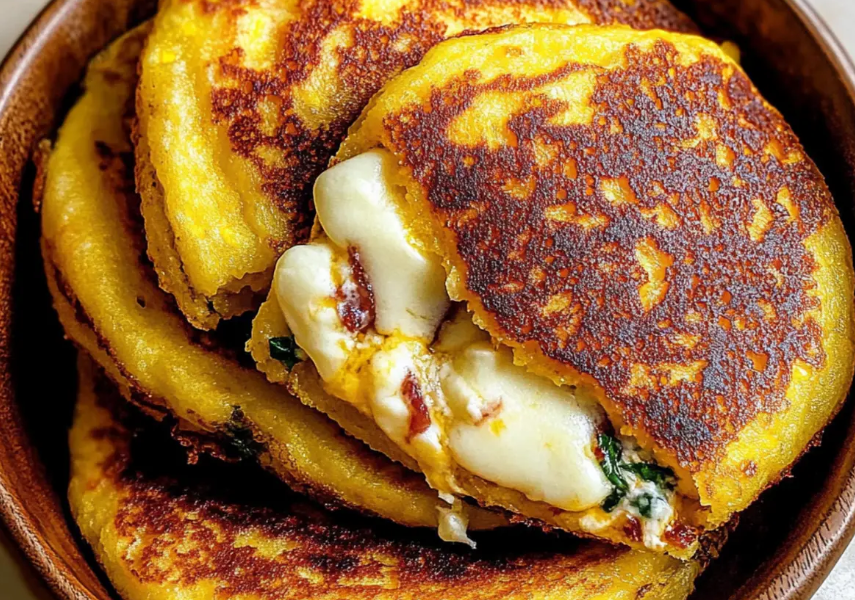
The Ultimate Guide to Authentic Venezuelan Sweet Corn Cachapas: A Sweet and Cheesy Masterpiece
Let’s be completely honest for a second: there are very few flavor combinations in the culinary world that can rival the absolute perfection of sweet and salty. It is the ultimate flavor dynamic that keeps us coming back for more. If you are a fan of that beautiful contrast, then grab a seat and get comfortable, because today we are taking a deep dive into one of South America’s greatest culinary treasures.
Welcome to the wonderful, mouth-watering world of Venezuelan Sweet Corn Cachapas.
If you have never experienced the joy of eating a hot, fresh cachapa straight off the griddle, I need you to drop whatever you are doing and put this recipe at the very top of your must-make list. Imagine a thick, rustic, golden-brown pancake made almost entirely from fresh, sweet corn kernels. Now, imagine taking that sweet corn pancake, slathering it in high-quality butter, and folding it over a massive, ungodly slab of gooey, salty, melting white cheese.
It is rustic, it is messy, it is eaten with your hands, and it is absolute perfection.
In this comprehensive guide, we are going to break down absolutely everything you need to know about how to make cachapas at home. From choosing the exact right type of corn to finding the perfect queso a mano substitute at your local grocery store, I am going to walk you through every single step. Get your cast-iron skillets ready, because your weekend brunch game is about to change forever!
What Exactly Are Cachapas?
To truly appreciate the magic of this dish, we need to understand what it is. At its core, a cachapa (pronounced cah-chah-pah) is a traditional Venezuelan dish that resembles a thick pancake. However, unlike traditional American pancakes that rely on wheat flour, baking powder, and milk to create a fluffy batter, cachapas are all about the corn.
These Venezuelan corn pancakes have deep indigenous roots, dating back to pre-Columbian times when indigenous tribes in the region cultivated corn as a staple of their diet. The traditional preparation involved grinding fresh, milky corn kernels using stone tools, mixing the mash with a little bit of water or milk, and cooking the thick batter on a flat clay or iron griddle known as a budare.
Today, the modern authentic cachapas recipe remains incredibly true to those ancient roots. The star of the show is still the fresh, sweet corn. The batter is thick, slightly lumpy, and intensely flavorful. When cooked, the natural sugars in the corn caramelize against the hot metal of the pan, creating a beautiful, dark golden-brown crust with a soft, tender, pudding-like interior.
Arepas vs. Cachapas: The Ultimate Showdown
If you are familiar with Venezuelan cuisine, your mind might immediately jump to arepas. So, what is the difference? While both are iconic Venezuelan dishes made from corn, they are completely different animals.
- Arepas are made from precooked, dehydrated cornmeal (like Harina P.A.N.). The dough is kneaded like bread dough, shaped into thick discs, and grilled until crispy on the outside. You slice them open like a pita bread and stuff them with various savory fillings. They are an everyday, anytime-of-day staple.
- Cachapas, on the other hand, are made from fresh (or frozen) whole sweet corn kernels blended into a liquid batter. They are cooked flat like a pancake and folded over their filling. Because of the natural sweetness of the fresh corn, cachapas are much sweeter than arepas and are often viewed as a hearty weekend breakfast, brunch, or special treat.
The Anatomy of the Perfect Cachapa: Ingredient Deep Dive
The beauty of sweet corn recipes is that they do not require a massive list of complicated ingredients. Because this recipe is so simple, the quality of the ingredients you use will make or break the final dish. Let’s break down the shopping list.
1. The Corn (The Undisputed Star)
You cannot make good cachapas with bad corn. The texture and sweetness of the batter depend entirely on the moisture and sugar content of the kernels.
- Fresh Corn on the Cob: This is the traditional and absolute best option, especially during the summer months when sweet corn is at its peak. You want plump, juicy kernels. You will need about 4 to 5 large ears of corn to get enough kernels for a batch.
- Frozen Corn: If fresh sweet corn is out of season, frozen corn is a fantastic backup plan. Frozen corn is typically flash-frozen at the peak of freshness, so it retains its natural sugars and moisture perfectly. Just make sure to thaw and drain it well before blending.
- Canned Corn: I strongly advise against using canned corn. It sits in water and preservatives, changing the texture and diluting the natural flavor. If you want an authentic cachapas recipe, stick to fresh or frozen!
2. The Binder (Harina P.A.N. or Cornmeal)
Fresh corn contains a lot of water. If you just blend corn and pour it into a pan, it will turn into a soupy mess and never hold together. To give the batter structure, we need a binder. The traditional choice is a few tablespoons of precooked white or yellow cornmeal, specifically the brand Harina P.A.N. (the same flour used for arepas). This absorbs the excess moisture and gives the pancake structure. If you don’t have Harina P.A.N., a very fine traditional cornmeal or even a tablespoon of all-purpose flour (if you aren’t worried about keeping them gluten-free corn pancakes) will work in a pinch.
3. The Liquids (Milk and Butter)
To get the blender moving and to create a smooth, pourable batter, we need a little bit of liquid. Whole milk is the standard choice, adding a touch of richness. We also add a couple of tablespoons of melted, unsalted butter right into the batter. This helps the interior stay moist and aids in that beautiful exterior caramelization.
4. Flavor Enhancers (Sugar and Salt)
Even if you have the sweetest corn in the world, a traditional cachapa batter needs a little boost. A tablespoon or two of sugar enhances the corn’s natural sweetness, while a generous pinch of salt is absolutely mandatory to balance the flavor profile and wake up all the ingredients.
Let’s Talk About the Cheese (The Soul Mate)
If the corn is the star of the show, the cheese is the soul mate. You simply cannot serve a cachapa by itself. The entire experience revolves around the contrast between the hot, sweet corn pancake and the cold, salty, squeaky cheese hidden inside.
In Venezuela, the traditional cheese used is Queso a Mano (which translates to “handmade cheese”). It is a soft, fresh, white cheese with a layered, slightly elastic texture that is incredibly similar to fresh mozzarella, but with a tangier, much saltier flavor profile. When it hits the hot corn pancake, it softens and turns gooey without completely turning into liquid.
Another popular option is Queso Guayanés, which is even softer, creamier, and saltier.
Finding a Queso a Mano Substitute
Unless you live near a specialized Latin American grocery store, finding authentic Queso a Mano can be a serious challenge. But don’t panic! You can easily replicate the experience with cheeses found at any standard supermarket. Here are the best queso a mano substitute options:
- Fresh Mozzarella + Feta/Cotija: Fresh mozzarella gives you that perfect, stringy, gooey melt, but it lacks the sharp saltiness of Venezuelan cheese. To fix this, mix slices of fresh mozzarella with crumbled feta or cotija cheese to add that necessary salty punch.
- Oaxaca Cheese: This Mexican string cheese is an excellent stand-in. It melts beautifully and has a slightly salty, tangy flavor that pairs perfectly with the sweet corn.
- Halloumi: If you prefer a cheese that holds its shape and gives a satisfying “squeak” when you bite into it, thinly sliced halloumi is a fantastic option. It is incredibly salty and contrasts beautifully with the sweet batter.
- Monterey Jack or Havarti: If you just want maximum gooey meltiness, grab a block of Jack or Havarti. They are mild but have an incredible melting texture.
Essential Equipment for Cachapa Making
You do not need a professional kitchen to make these, but having the right tools will make the process infinitely easier.
- A High-Powered Blender or Food Processor: You need something with enough horsepower to break down the tough skins of the corn kernels and create a cohesive batter.
- A Cast Iron Skillet or Heavy Griddle: The traditional budare is basically a flat cast-iron plate. You need a pan that retains heat incredibly well to ensure the cachapa cooks evenly and gets that signature dark crust without burning. Flimsy, thin non-stick pans often struggle to provide an even sear.
- A Wide, Sturdy Spatula: Cachapas are heavy and delicate before they are flipped. You need a spatula wide enough to support the center of the pancake when you turn it over.
Step-by-Step Instructions: How to Make Cachapas at Home
Alright, let’s put on our aprons and get to work. This process is straightforward, but technique is everything. Here is your foolproof guide to making perfect Venezuelan Sweet Corn Cachapas.
Step 1: Prepare the Corn
If using fresh corn, shuck the ears and carefully slice the kernels off the cob using a sharp chef’s knife. (Tip: Place a smaller bowl upside down inside a larger bowl, stand the corn on the smaller bowl, and slice downward. The larger bowl will catch all the flying kernels!). If using frozen corn, ensure it is completely thawed and pat it dry with paper towels to remove excess water. You need about 3 cups of corn kernels.
Step 2: Blend the Batter
Transfer your corn kernels into the jug of your blender or food processor. Add in:
- 1/4 cup of whole milk
- 2 tablespoons of melted unsalted butter
- 2 tablespoons of granulated sugar
- 1 teaspoon of kosher salt
Pulse the mixture a few times to get the blades moving, then blend on medium speed. You want to break down the kernels, but you do not want to turn it into a completely smooth puree. A traditional cachapa has texture! It should look a bit rustic and slightly chunky.
Step 3: Thicken with Harina P.A.N.
Pour the blended corn mixture into a large mixing bowl. Now, gradually sprinkle in 1/4 cup of Harina P.A.N. (precooked cornmeal). Stir it gently with a wooden spoon.
Let the batter sit on the counter for about 10 to 15 minutes. This resting period is critical! It allows the dehydrated cornmeal to absorb the excess liquid from the fresh corn, thickening the batter to the consistency of thick oatmeal. If, after 15 minutes, the batter still looks too watery, add another tablespoon of cornmeal. If it looks too thick and stiff, add a splash of milk.
Step 4: Preheat the Skillet
Place your cast-iron skillet or griddle over medium-low heat. Let it preheat slowly for at least 5 minutes. You want the pan to be thoroughly hot, but not smoking. Because the batter has a high sugar content, it will burn very quickly if the pan is too hot.
Add a teaspoon of butter or oil to the pan and wipe it around with a paper towel, leaving just a thin, glossy film on the surface.
Step 5: Pour and Shape
Using a ladle, scoop about 1/2 cup of the thick batter into the center of the hot skillet. Use the back of the ladle or a spoon to gently spread the batter out into a circle, about 5 to 6 inches in diameter and about 1/3 of an inch thick.
Step 6: The Golden Cook
Let the cachapa cook undisturbed. Do not touch it! You will know it is ready to flip when the edges start to look dry, the top surface appears slightly matte, and little bubbles begin to form and pop across the surface. This usually takes about 3 to 4 minutes.
Carefully slide your wide spatula completely under the cachapa and flip it in one confident motion. Cook the second side for another 2 to 3 minutes until golden brown.
Step 7: Cheese and Fold!
While the cachapa is still hot in the pan, slather the top surface with a little extra butter. Place a massive, generous layer of your chosen cheese covering one-half of the pancake. Using your spatula, carefully fold the other half of the cachapa over the cheese, creating a half-moon shape.
Press down slightly to encourage the cheese to melt. Transfer to a plate, and serve immediately while it is steaming hot!
Troubleshooting Your Batter: Tips for Success
Even with a perfect recipe, dealing with fresh agricultural ingredients like corn means you might need to make small adjustments on the fly. Here is a quick troubleshooting guide:
| The Problem | The Cause | The Solution |
| Batter is spreading too thin in the pan. | The corn was too watery, or not enough binder was used. | Stir in an extra 1-2 tablespoons of Harina P.A.N. and let it rest for 5 minutes before cooking the next one. |
| Cachapas are breaking when flipping. | Flipped too early, or the batter is too dry. | Ensure the edges are fully set and dry before flipping. If the batter resembles dough rather than thick pancake batter, add a splash of milk. |
| Outside is burning, but the inside is raw. | The stove heat is way too high. | Turn the heat down to medium-low. The sugars in the corn need a gentle, steady heat to caramelize beautifully without scorching. |
| They taste a bit bland. | Not enough salt. | Sweet corn desperately needs salt to elevate its flavor. Don’t be afraid to add a hearty pinch of kosher salt to the batter! |
Elevating the Experience: Creative Fillings and Variations
While a classic cheese filling is the undisputed king of traditional Venezuelan food, cachapas are incredibly versatile. In Venezuela, they are often loaded with hearty meats to create an absolute flavor bomb of a meal. Here are some incredible variations to try:
1. Cachapa con Pernil (Roasted Pork)
This is the ultimate savory upgrade. Slow-roasted, incredibly tender, citrus-marinated pork shoulder (pernil) is shredded and stuffed inside the cachapa alongside the cheese. The savory, garlic, and citrus notes of the pork cut through the sweetness of the corn perfectly.
2. Carne Mechada (Shredded Beef)
Venezuelan shredded beef, cooked down in a rich tomato, bell pepper, and onion sofrito (the same beef used in Pabellón Criollo), is another classic filling. The rich sauce of the beef soaks into the spongy interior of the corn pancake, creating magic.
3. The Vegetarian Delight
If you want to keep it meat-free but want something more substantial than just cheese, try adding sliced avocado, sweet fried plantains (tajadas), and a drizzle of guasacaca (a bright, zesty Venezuelan cilantro and avocado sauce).
Storage, Freezing, and Reheating Instructions
Cachapas are best eaten immediately, straight out of the skillet, while the crust is crisp and the cheese is molten. However, if you make a big batch, they store surprisingly well!
In the Fridge: Allow the cooked, unfilled cachapas to cool completely on a wire rack. Once cool, stack them with a piece of parchment paper between each one (to prevent sticking) and place them in an airtight container or a heavy-duty ziplock bag. They will keep in the fridge for up to 4 days.
In the Freezer: These freeze beautifully! Using the same parchment paper method, place the stacked cachapas into a freezer-safe bag, squeeze out all the excess air, and freeze for up to 3 months.
How to Reheat: Please, do not put these in the microwave! A microwave will turn the beautiful corn crust into a soggy, rubbery sponge. To reheat, place a skillet over medium-low heat. Add a tiny dot of butter and place the cold (or frozen) cachapa in the pan. Heat slowly for a few minutes on each side until warmed through. Add your cheese, fold, and enjoy! You can also reheat them in a toaster oven or an air fryer set to 350°F (175°C) for about 5 minutes.
Frequently Asked Questions (FAQs)
Can I make the batter ahead of time?
Yes and no. You can blend the corn and liquid ingredients together up to a day in advance and store the mixture in the fridge. However, I highly recommend waiting to add the Harina P.A.N. (the cornmeal binder) until right before you are ready to cook. If the cornmeal sits in the liquid for 24 hours, it will absorb too much moisture, and the batter will turn into a solid brick of dough.
Why do my cachapas taste bitter?
This usually happens if you over-blend the corn. If you process the corn into a complete, smooth liquid, you run the risk of grinding up the tiny, fibrous “germ” at the base of the kernel, which can sometimes release a slightly bitter flavor. Remember: pulse gently and keep a little texture in the batter!
Are cachapas healthy?
They are certainly made from wholesome, natural ingredients! Because they use corn instead of refined wheat flour, they are a fantastic option if you are looking for gluten-free corn pancakes. However, they are traditionally cooked in butter and stuffed with a massive amount of cheese, so they lean more towards “comfort food” than “diet food.” Life is all about balance, right?
Can I use regular yellow cornmeal instead of Harina P.A.N.?
If you are in a pinch, yes. However, Harina P.A.N. is precooked cornmeal, which means it absorbs liquid instantly and cooks incredibly fast. Regular cornmeal is raw and has a grittier texture. If you must use regular fine cornmeal, let the batter rest for at least 30 minutes to soften the grit before cooking.
Final Thoughts: Bring the Taste of Venezuela to Your Kitchen
Mastering this authentic cachapas recipe is more than just learning how to cook a new breakfast dish; it is about experiencing the vibrant, soulful, and comforting culinary culture of Venezuela. There is a deep, rustic beauty in taking simple ingredients—fresh corn, milk, butter, and salt—and transforming them into a dish that evokes such incredible joy.
The next time you are standing in the produce section staring at a pile of fresh sweet corn, skip the boiling water and the cob holders. Grab your blender, fire up your cast-iron skillet, and treat yourself to the ultimate sweet and savory masterpiece.
Happy cooking, and enjoy every single cheesy, golden bite!